
September 10
Nectir has been selected by GEN Global, and MCI Australia, to support the annual Global Entrepreneurship Congress (GEC) 2023 in Melbourne, Australia. The Nectir platform will allow academia, innovators, entrepreneurs, investors, policymakers, corporations, researchers, incubators, accelerator managers and support providers to create a community focus on practical challenges to transform our world and build a community of aspiring ideation across all stages of the congress.
Nectir, the world’s smartest idea and innovation software is set to showcase Australian innovation to the globe. A secure Software as a Service (SaaS) product that dramatically enhances idea engagement by bringing all people of an organisation or Eco System together to collectively share ideas, solve business challenges and execute the best thinking across business. It is Australian owned, developed in Canberra and is already being used by some major government agencies, such as Australia’s Department of Defence and AirServices Australia. Add Your Ideas for Innovation Challenges Before the 2023 Global Entrepreneurship Congress: https://www.youtube.com/watch?v=gEGpkfNYQM4
“Being able to host this event in Australia, utilising a sovereign owned platform, is a once in a lifetime opportunity” states Nectir Managing Director, Tristan Maddigan, as he reflects on the Victorian Government successfully bidding to ensure #GEC2023 is in Melbourne, bringing together thousands of voices, from more than 200 countries to participate in creating one inclusive global ecosystem by networking, learning, sharing, and creating real action.
Nectir’s philosophy is to be world-leading in innovation and growth management programs which empowers people to deliver the ‘better way’ for their organisation, makes a positive impact on their lives and their customers, and the world in which their organisation operates “and this is what makes us the perfect inclusion for the GEC” adds Tristan.
Hosted in Melbourne on 19-22 September 2023, the GEC is set to be four days of actionable intelligence, collaboration, and collective action. Key collaborator for the event, Managing Director, Stephan Wurzinger MCI Australia, mentions that “the GEC has the ability to inspire some real breakthrough moments by encouraging and enabling entrepreneurs, innovators and thinkers to thrive in this cohesive environment. And we believe that when people come together, magic really does happen”. The GEC is the only annual global conference dedicated to building capacity in entrepreneur ecosystems. It is delivered by the Global Entrepreneurship Network (GEN), a non-profit organisation operating programs in 200 countries aimed at making it easier for anyone, anywhere to start and scale a business.
The GEC could not come at a more opportune time. Daily news headlines forecast a year of economic, political, and social pressures. Even as innovation and entrepreneurship contribute to many of these challenges, it is only through collective innovation and entrepreneurial action that these challenges can be addressed in the long term. With this in mind, Managing Director Global Entrepreneurship Network Australia, Chad Renando highlights “we are on our way to realising the vision to transform entrepreneurship for the host city of Melbourne, for the Australian innovation ecosystem, for global ecosystems through international delegations, and for future GECs” he adds, “My vision for Nectir is to extend the opportunity for this great community to connect before, during, and most importantly following the event, right through until the next GEC and into other innovation events across Australia. An ongoing collaborating ecosystem. It’s a powerful notion”.
For further details on #GEC2023 please visit https://nectir.co/events. where you will be invited to register for the GEC to hear keynote speakers Kelly Slater and Mick Fanning explain why 2023 is the year of collective action and transformation.
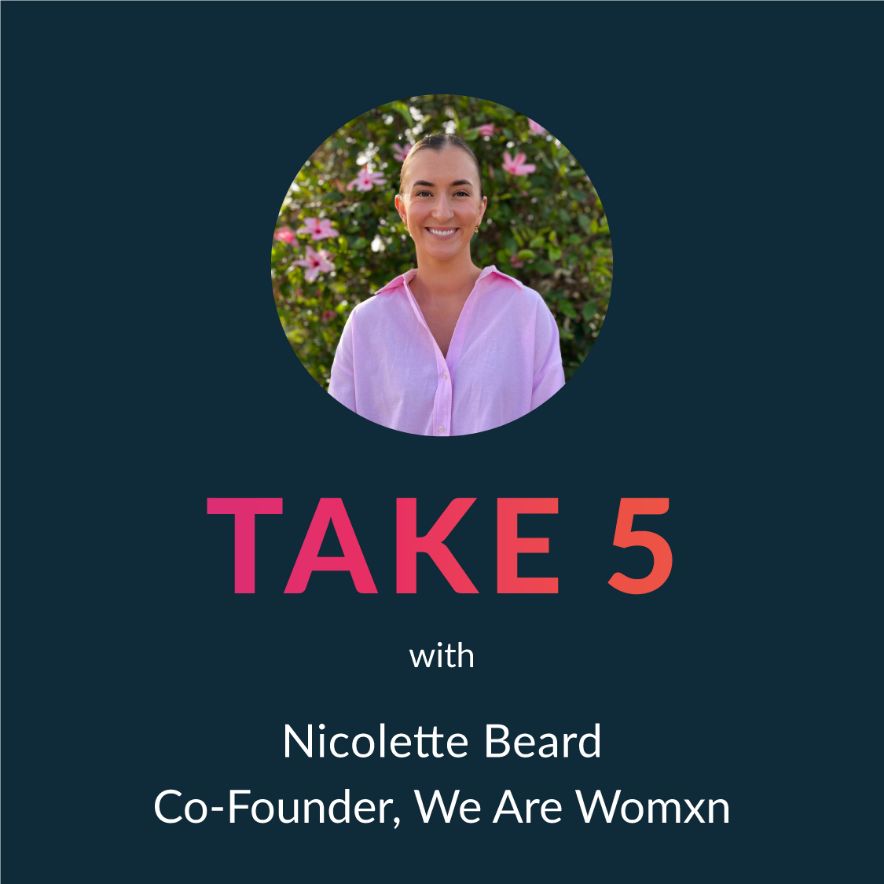
We were thrilled to speak with Nicolette Beard, co-founder of We Are Womxn, and one of this year’s GEC speakers. With experience in health promotion and teaching, Nicolette is dedicated to providing tailored education and uplifting female adolescents. Recognising the lack of female-centric education, Nicolette, along with Co-Founder Kate Raston, embarked on a mission to break down barriers and ignite transformation. Her passion lies in health education for young women in Western Australia, aiming to create positive change and empower future generations. Nicolette’s journey is one of authenticity, challenging norms, and using education as a transformative force to guide women towards empowerment and lasting impact.
As a prominent figure in entrepreneurship and innovation, what aspects of the Global Entrepreneurship Congress (GEC) have you found most valuable for fostering international collaboration and building a unified global ecosystem?
I have never attended the GEC before, but I am thoroughly looking forward to speaking this September and being involved in the congress. Through networking, knowledge sharing, and showcasing innovative ventures, the GEC brings together entrepreneurs, investors, and experts from around the world, something I am very excited to be a part of. This platform allows for the exchange of ideas, experiences, and best practices, leading to valuable collaborations and partnerships.
The diverse range of workshops, panel discussions, and presentations at the GEC offer insights into different entrepreneurial ecosystems and emerging trends. By learning from successful entrepreneurs and industry leaders, we are excited to gain valuable knowledge and perspectives that can be applied to our own ventures.
With your extensive experience, could you share an example of a challenge you’ve faced in your entrepreneurial journey that required innovative thinking to overcome? What lessons did you learn from that experience?
In starting We Are Womxn, we faced numerous challenges that persist to this day. These hurdles included constant questioning of our qualifications and knowledge to educate students on gender disparities, consent education, and toxic relationships. Many people believed this work was unnecessary, denying the existence of these issues in society. This scepticism reinforced the belief that young women’s concerns and educational needs were not taken seriously. Societal perceptions that undermined the legitimacy of our work as women added to the challenges.
However, these obstacles taught us valuable lessons. We learned to assert our expertise and prove our qualifications through our work. We found alternative ways to reach our audience by partnering with community organisations and leveraging social media. We developed resilience and persistence, advocating for the importance of this health education. We also became resourceful in seeking funding opportunities through grants, crowdfunding, and partnerships. These challenges strengthened our determination and commitment to our mission, driving us to overcome obstacles and make a meaningful impact.
The GEC emphasises actionable intelligence and collective action. In your view, what role do shared knowledge and collaborative initiatives play in accelerating innovation and business growth on a global scale?
I truly believe that collaboration is the key to unlocking new possibilities. When we bring together diverse perspectives and combine our resources, skills, and expertise, we gain a deeper understanding of the challenges we face and the opportunities that lie ahead. Collaboration not only fuels faster innovation and problem- solving, but it also fosters continuous learning and development.
In the ever-evolving landscape of 2023, collaboration becomes even more crucial. By working together, we can stay ahead of emerging technologies and trends, ensuring that our businesses thrive in this rapidly changing environment. Collaborative networks open doors to global markets, providing access to new resources and expertise that can help us expand our reach and explore exciting growth opportunities, something we are very passionate about at We Are Womxn.
Entrepreneurship often involves navigating uncertainty and taking calculated risks. Can you highlight a situation where you had to make a pivotal decision for your venture amidst uncertainty? How did you approach it, and what factors guided your choice?
Starting our business, We Are Womxn, was a pivotal risk, as we were uncertain if it would be accepted and valued in society. Embracing risks is an integral aspect of entrepreneurship, however, driven by our knowledge and skill set, we recognised the urgent need for this education and were passionate enough to launch our business amidst the uncertainty of its success. Our decision was guided by personal experience, market research, and the lack of this type of education currently accessible for young women. Our goal was to empower and educate young women, creating a safe and inclusive space where they could feel confident in themselves. Despite the challenges, we believed in the importance of providing this education and were determined to make a positive impact. With our expertise and dedication, we set out to empower young women, ensuring they had the tools and knowledge needed to thrive in society.
The GEC brings together diverse voices from over 200 countries. How important is cultural intelligence and adaptability when it comes to creating an inclusive global ecosystem for entrepreneurship? Could you share an experience that highlights the significance of understanding different cultural perspectives in business?
Cultural intelligence and adaptability are crucial for building an inclusive global entrepreneurship ecosystem. In today’s interconnected world, businesses interact with diverse cultures, making it essential to understand and appreciate different cultural norms and practices. Cultural intelligence enables effective navigation of cultural differences, fostering communication, trust, and respect. By embracing cultural diversity, entrepreneurs gain access to a wealth of perspectives, ideas, and experiences, driving innovation and creativity. Adaptability is equally important, allowing entrepreneurs to tailor strategies, products, and services to meet the needs of different cultural contexts. Adapting to local customs and business practices demonstrates respect and sensitivity, vital for success in diverse markets.
At We Are Womxn, we prioritise cultural adaptation and education for women and girls from diverse backgrounds. Our goal is to create an inclusive environment where participants feel accepted, valued, and empowered. By providing culturally sensitive education, we equip individuals with knowledge that resonates with their specific cultural context, fostering a sense of belonging. Through embracing diversity and adapting our work, we aim to create a transformative experience where everyone benefits from our inclusive approach.
August 30

Julia Spicer OAM is Managing Director of Engage and Create Consulting. Julia’s focus is to support the viability and vibrancy of businesses and community organisations across regional Australia. In addition to Engage and Create Consulting Julia is Queensland Chief Entrepreneur, Chairperson for Global Entrepreneurship Network Australia, and a Member for the Innovation and Advisory Council.
As a prominent figure in entrepreneurship and innovation, what aspects of the Global Entrepreneurship Congress (GEC) have you found most valuable for fostering international collaboration and building a unified global ecosystem?
Understanding that the challenges we have are similar regardless of where we are innovating in the world was a massive take home for me from GEC 2022 in Saudi Arabia. I am looking forward to reconnecting with contacts from around the world in a few weeks and understanding how current global conditions impacting their ability to innovate and grow their business and alternatively understand trends in the rest of the world that may not be in Australia yet.
With your extensive experience, could you share an example of a challenge you’ve faced in your entrepreneurial journey that required innovative thinking to overcome? What lessons did you learn from that experience?
I think most regional businesses are constantly dealing with challenges which is why we are innate entrepreneurs. I have had to learn how to combine online programmes with face to face customer engagement given I live in a region with a low population.
The GEC emphasises actionable intelligence and collective action. In your view, what role does shared knowledge and collaborative initiatives play in accelerating innovation and business growth on a global scale?
I think the GEC allows people to understand the value of collaboration and sharing both wins and losses in a safe space so that we can support other entrepreneurs globally to learn from experiences of others and move more quickly towards their definition of success.
Entrepreneurship often involves navigating uncertainty and taking calculated risks. Can you highlight a situation where you had to make a pivotal decision for your venture amidst uncertainty? How did you approach it, and what factors guided your choice?
I have had situations where regardless of initial considerations the outcome has not been what we expected and therefore we needed to make decisions to stop programmes or pivot away from ideas that we were invested in. This can be difficult if we are attached emotionally to what we are wanting to do in our businesses and so it is important for me to be able to come back to the reason I am doing activities and the outcome I want in the long term.
The GEC brings together diverse voices from over 200 countries. How important is cultural intelligence and adaptability when it comes to creating an inclusive global ecosystem for entrepreneurship? Could you share an experience that highlights the significance of understanding different cultural perspectives in business?
Anytime I can get an alternative perspective on the work that I’m doing I take it. If we all look the same, sound the same, and have the same experiences we are missing a massive opportunity to identify a new or different path. I loved the opportunity to meet so many different cultures at GEC 2022 and I look forward to doing the same in Melbourne for GEC 2023.
August 24
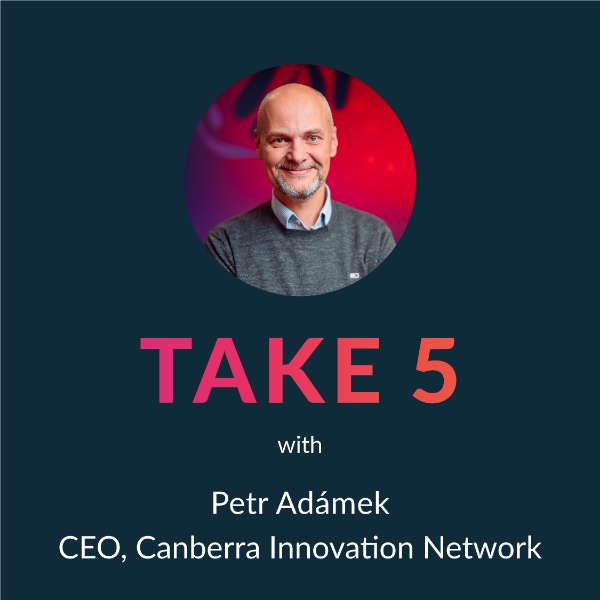
Our first interview in the Take 5 series. We sat down with Petr Adámek, CEO of Canberra Innovation Network (CBRIN). With a belief that entrepreneurs are everywhere, CBRIN’s mission is to empower start-ups and entrepreneurs to uncover their potential, make an impact and change the world.
Question: As a prominent figure in entrepreneurship and innovation, what aspects of the Global Entrepreneurship Congress (GEC) have you found most valuable for fostering international collaboration and building a unified global ecosystem?
Answer: I have never been to a GEC before, but I have engaged a lot with the Global Entrepreneurship Network. I see GEC as a giant melting pot of ideas, experiences and visions about the future as well as best practice of entrepreneurial innovation ecosystems from around the world, all in one place. Two standout aspects for innovation intermediaries, like the Canberra Innovation Network (CBRIN), is the platform GEC provides for cross-border partnerships and the sharing and interactions about best practices. By gathering entrepreneurs and those who work with them from various ecosystems, GEC fosters collaboration that connects us across borders and industries, creating a truly diverse and collaborative global entrepreneurial environment.
Question: With your extensive experience, could you share an example of a challenge you’ve faced in your entrepreneurial journey that required innovative thinking to overcome? What lessons did you learn from that experience?
Answer: Early in our journey at CBRIN, we had opportunities to do many many things to stimulate innovation in our ecosystem. From creative industries to STEM education to national innovation connectivity, government innovation, student entrepreneurship, indigenous entrepreneurship, running programs, ongoing mapping of the ecosystem, sector clustering, and so on. It was frankly overwhelming and it was clear that if we tried to do it all we would not be able to do it well and have impact. The innovative thinking (and doing) we applied was about focus. Finding what matters the most and then working with others to make it happen. Entrepreneurs would label it as their key metric. For us it was the number and diversity of high growth globally relevant innovation companies that we can help. We focused our attention on people, programs, partnerships, infrastructure and activities that support the emergence, learning and growth of these companies within our innovation ecosystem. This has changed the game for us. We now coordinate, partner for, support and oversee a lot of activities, often conducted by others, but with a single aligning focus.
Question: The GEC emphasises actionable intelligence and collective action. In your view, what role does shared knowledge and collaborative initiatives play in accelerating innovation and business growth on a global scale?
Answer: Shared knowledge acts as a source of inspiration, benchmarking, motivation and it is a critical catalyst for innovation, collaboration and progress. Collaborative innovation (and our team delivers sessions on this at the congress) enables those who actively participate to tap into collective intelligence, resources and perspectives. At CBRIN, we believe this is one of the most effective ways to create and activate a community, create alignment, coherence, positive energy and momentum towards action. On a global scale, this enables exposure to what others are doing, it facilitates learning and builds motivation for our respective innovation ecosystems. In essence, global collaboration of ecosystem builders improve the experiences for entrepreneurs everywhere. This is critical, as we need more entrepreneurship, more people with the ambition, drive and the right support so they can create new impactful solutions to some of the most pressing issues of our time.
Question: Entrepreneurship often involves navigating uncertainty and taking calculated risks. Can you highlight a situation where you had to make a pivotal decision for your venture amidst uncertainty? How did you approach it, and what factors guided your choice?
Answer: I believe we cannot and should not try to avoid uncertainty. Entrepreneurs make decisions with imperfect information, under time and resource pressure and we as a global community of supporters need them to be able to do these decisions often and learn from the outcomes. This will sound strange, but the pivotal decisions for CBRIN, are often traced to decisions about our vision and guiding principles. We believe (and are inspired by the book Rainforest: The Secret to Building the Next Silicon Valley) that innovation ecosystems are more like rainforests rather than like organised agricultural systems. We believe that conscious and collective investment in innovation culture and celebrating behaviours that model and improve this culture is instrumental to dealing with uncertainty. The culture provides the safe environment where experiments and learnings are valued as much as achievements.
Question: The GEC brings together diverse voices from over 200 countries. How important is cultural intelligence and adaptability when it comes to creating an inclusive global ecosystem for entrepreneurship? Could you share an experience that highlights the significance of understanding different cultural perspectives in business?
Answer: Innovation and entrepreneurship is about culture. I see culture in the innovation context more broadly – each element of the triple (quadruple) helix has its own subculture, each sector and each organisation has their own culture. Interaction and collaboration of these cultures is not automatically easy, it requires work, open mindset and adaptability. In Australia there is a special context that all of us operate on lands that are being looked after by peoples who are the oldest civilisation on earth. Our respect to their culture and their leadership is critical for our joint porgress. And I see this in the same way in the international context. Cultural intelligence and genuine, conscious investment in learning about and respect of other cultures will make this world a better place. It can reduce international conflict and tensions and unite our resources, ideas and drive to help people and the planet be better off in the long term.